Imaging-Guided Tunneled Catheter Placement (For Dialysis)
1 dakika okuma süresi
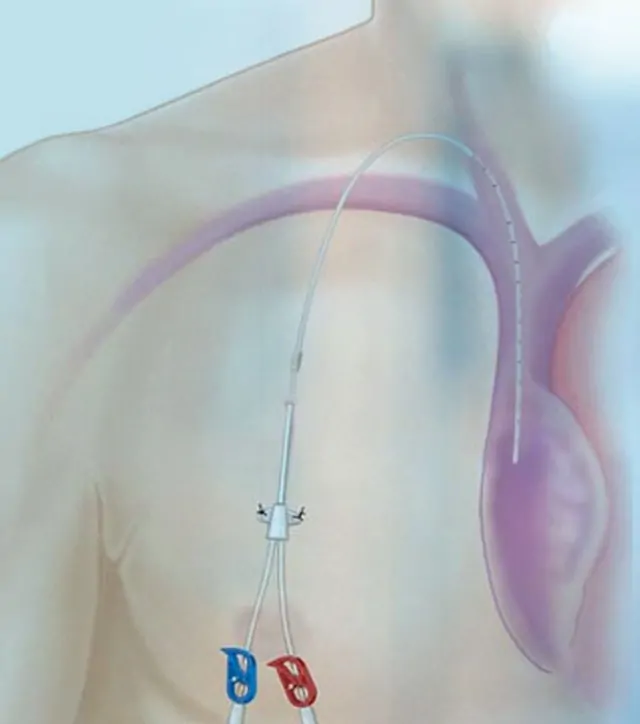
Dialysis patients may require the placement of a tunneled catheter for a limited period of time. In these cases, we use both ultrasound and fluoroscopy guidance in our Interventional Radiology department, ensuring sterile conditions for catheter placement.
Ultrasound guidance allows for the catheter tunnel to be placed very close to the chest wall, allowing for more convenient and unnoticeable placement.
This method allows for longer catheter patency when inserted through the jugular vein.
Performing the procedure under fluoroscopy allows visualization of the catheter tip's direction, thus eliminating the need to extend the catheter into undesirable areas (such as the contralateral arm vein or the contralateral neck vein).
Furthermore, this type of catheterization carries a rare, serious complication that can lead to death.
To ensure that this complication, called air embolism, is immediately recognized and the air is promptly aspirated from the heart, the procedure must be performed under fluoroscopy guidance.