What are the Classical Treatments for Fibroids?
4 dakika okuma süresi
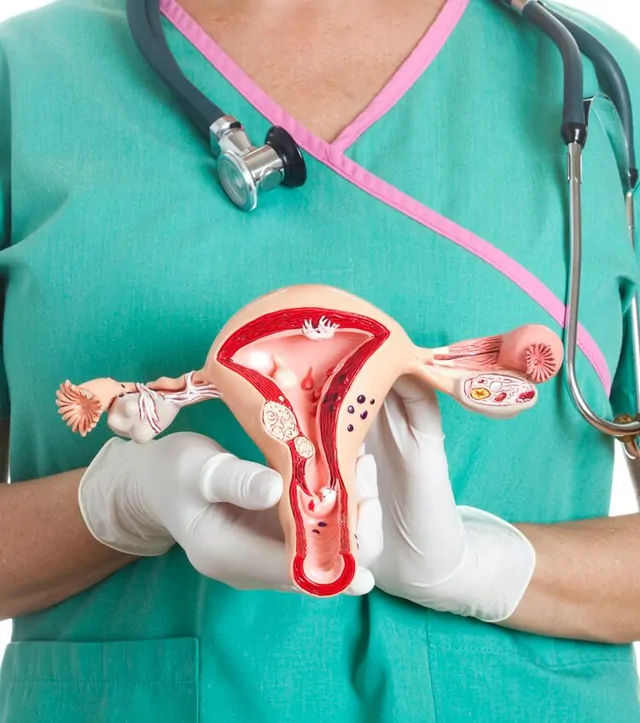
The most commonly used classical methods for treating fibroids today are hysterectomy and myomectomy. These two procedures are performed by gynecologists. Non-surgical methods for fibroid treatment include fibroid embolization, RF ablation, and HIFU (High-Intensity Focused Ultrasound). These modern treatment methods are performed by interventional radiologists.
Modern non-surgical treatment methods are easier and have fewer side effects, so they should be preferred whenever possible, as hysterectomy involves the irreversible removal of the uterus.
Your gynecologist and the interventional radiologist who performs these treatments should decide which treatment is most appropriate for you. If you are recommended a direct hysterectomy, it is advisable to consult an interventional radiologist experienced in non-surgical fibroid treatment before having your uterus removed.
Hysterectomy is a widely performed treatment despite its numerous negative consequences on quality of life. The most important reason for this widespread use is that the uterus is viewed as an organ solely for the delivery of babies.
Another reason is that it helps prevent cancers that may develop in the uterus and ovaries, which become dysfunctional after a certain age. A significant number of scientists and physicians oppose these two views.
After a hysterectomy, the complete removal of the uterus, patients can experience consequences that significantly reduce their quality of life. First, let's address the idea that removing these organs prevents cancer. A woman's risk of dying from uterine or ovarian cancer is less than 1%, while the risk of dying from cardiovascular disease is around 50%.
There are studies showing that the risk of heart attack increases threefold after hysterectomy. How can it be right to ignore the risk of death from such a common condition? Furthermore, the risk of osteoporosis increases after hysterectomy. If the ovaries are removed along with the uterus, the risk of osteoporosis (osteoporosis) increases even further. Hormonal pills prescribed to prevent these negative consequences also pose additional risks.
For example, a slight increase in the incidence of heart disease, thromboembolism (blood clot formation in a vein and traveling to the lungs), and breast cancer has been found in women using combined estrogen-progesterone pills. For these reasons, short-term use of these hormones is recommended. In light of all this information, it can be said that avoiding unnecessary hysterectomy and oophorectomy is highly beneficial if there is no cancer in the uterus or ovaries.
Some studies have shown that 30% of women experience symptoms such as frequent urination, a constant urge to urinate, and urinary incontinence after hysterectomy. These problems can be severe enough to warrant surgical intervention. The most important reason for this is the severing of the small nerves that connect to the bladder during surgery.
A cystocele (prolapse of the bladder) can occur due to the collapse of the anterior vaginal wall, and a rectocele (prolapse of the large intestine into the vagina) can occur due to the collapse of the posterior vaginal wall. Furthermore, the rectum, the final section of the large intestine, can become displaced after hysterectomy, causing symptoms such as constipation.
Myomectomy is another commonly performed procedure. This procedure involves removing only the fibroids and not the uterus. However, when there are numerous fibroids, this task becomes less straightforward. The more numerous the fibroids, the more difficult it becomes to completely remove them, the greater the blood loss and other complications associated with myomectomy, and the greater the risk of the surgery being converted to a hysterectomy.
Furthermore, when multiple fibroids are present, it becomes impossible to determine which fibroid is causing the primary symptoms. In this case, the success rate of myomectomy decreases, and if symptoms persist after myomectomy, a second operation is usually a hysterectomy. However, in such patients, all fibroids can be effectively treated without a hysterectomy through fibroid embolization.
Embolization should be the first treatment option for patients with multiple fibroids in the uterus. To understand the advantages of modern, non-surgical fibroid treatment methods and which treatment option is most appropriate for you, it's helpful to consult an interventional radiologist who performs these treatments.