Injection Treatments: Lumbar, Hip, Knee, and Shoulder Injections
3 min read
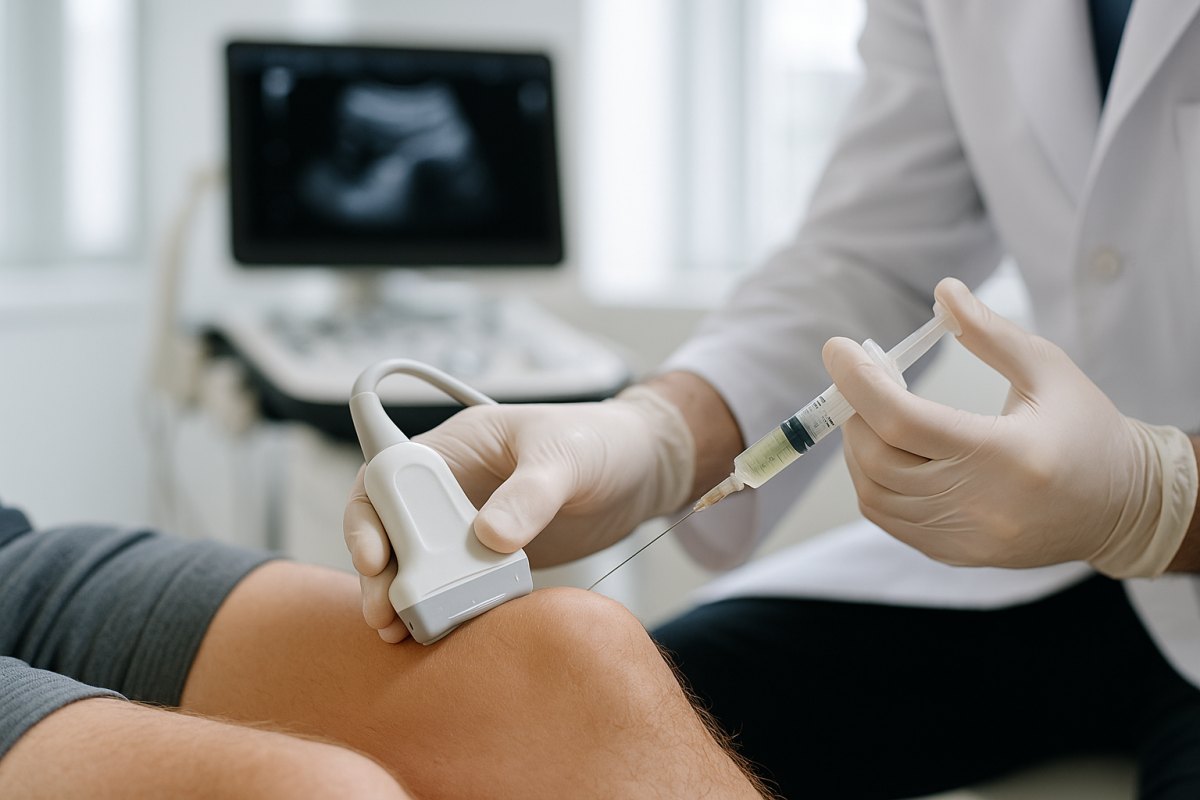
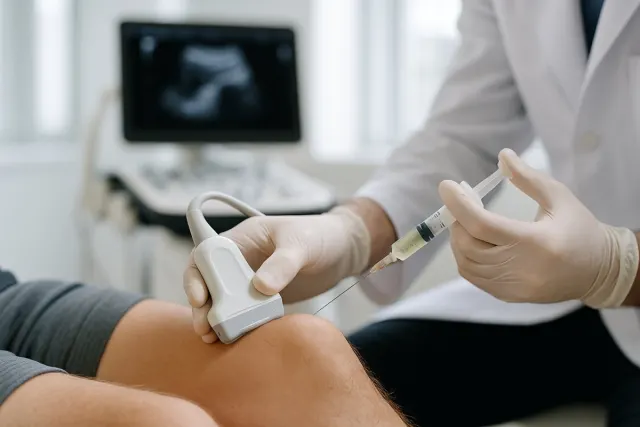
Injection treatments deliver medication directly to the source of pain in the lumbar spine, hip, knee and shoulder under imaging guidance. Because the needle position is confirmed with ultrasound or fluoroscopy, the treatment reaches its target accurately and unnecessary spread of medication is avoided.
When Are They Used?
- Lower back: leg pain from disc herniation, facet joint pain, degenerative changes
- Hip: osteoarthritis, trochanteric bursitis, tendon problems
- Knee: osteoarthritis, meniscal pain, bursitis
- Shoulder: impingement syndrome, rotator cuff tendinitis, frozen shoulder
Types of Injection
Corticosteroid Injections
Used to reduce inflammation and the pain it causes. The effect usually begins within days. Dose and frequency are controlled to limit side effects.
Hyaluronic Acid (Viscosupplementation)
Applied mainly in knee osteoarthritis to support the lubricating properties of joint fluid. The effect starts more slowly but may last longer.
PRP (Platelet-Rich Plasma)
Plasma with a raised platelet concentration, prepared from the patient's own blood, is delivered to the target tissue to support healing in tendon and joint disorders.
Local Anaesthetic Applications
Used both to identify the source of pain (diagnostic block) and to provide short-term relief.
Why Under Imaging Guidance?
With blind injections the needle may not reach the intended target, leaving the treatment ineffective or delivering medication to the wrong area. Ultrasound shows vessels, nerves and tendons in real time, while fluoroscopy allows precise targeting of spinal structures. This improves both safety and outcome.
The Procedure
- Before: examination and imaging are reviewed; blood thinners and allergy history are checked.
- During: the skin is cleaned and numbed, and the needle is guided to the target. Most procedures take 10-30 minutes.
- After: same-day discharge. A mild increase in pain during the first 24-48 hours is common and responds to ice and simple painkillers.
- Follow-up: response is assessed in two to four weeks, alongside an exercise or physiotherapy programme.
Frequently Asked Questions
How often can injections be repeated?
It depends on the agent and the site. Corticosteroid injections are given at defined intervals and in limited numbers; hyaluronic acid and PRP follow different schedules.
Will an injection cure osteoarthritis?
No. Osteoarthritis itself cannot be reversed; injections reduce pain and inflammation so that movement and exercise become possible.
Can I walk immediately afterwards?
Yes, most patients walk out after the procedure. Avoiding strenuous activity on the first day is advised.
PRP or cortisone: which is better?
There is no single answer. Corticosteroids give faster relief in an acute inflammatory picture, while PRP may be preferred when tendon healing is the goal. The choice depends on the diagnosis and the patient.
I have diabetes, can I have a steroid injection?
Corticosteroids can temporarily raise blood sugar. Dose and alternatives are assessed separately in diabetic patients; always mention it beforehand.
Consultation
To identify the right treatment for the source of your pain, you are welcome to get in touch with your imaging reports.