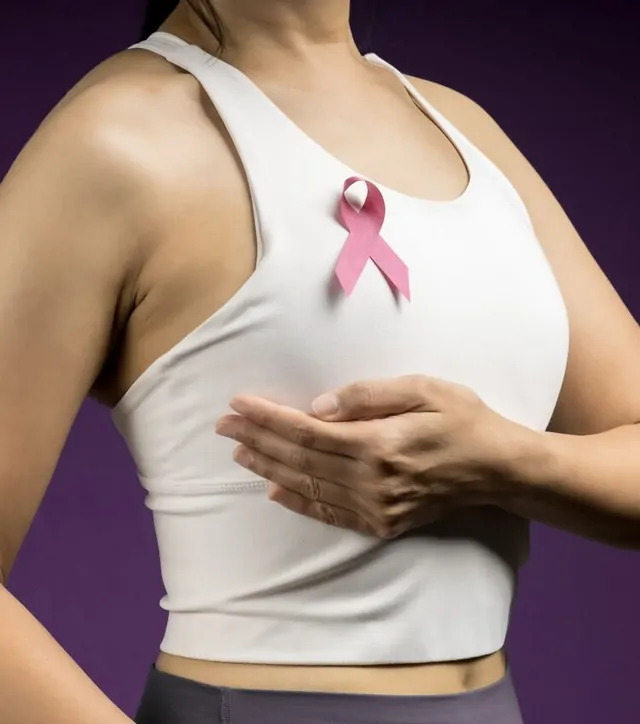
Is Non-Surgical Treatment Possible for Breast Cancer?
4 min read
Breast cancer is the most common type of cancer in women. However, fibroadenomas, which develop in the breast tissue, are benign masses. These lumps, which become more visible during pregnancy and can shrink during menopause, rarely become cancerous. Furthermore, a large number of benign masses increases the risk of breast cancer, albeit only slightly. However, thanks to the increasing use of non-surgical treatment methods in breast cancer in recent years, these lumps have become easily removed.
What are the Non-Surgical Treatment Methods for Breast Cancer?
Most fibroadenomas are detected during a self-examination or a manual breast examination by a specialist. However, ultrasound and mammography often reveal well-defined, elliptical or round lumps. They are also mobile enough to slip through fingers during a manual examination. For this reason, they are also called "breast mice." Benign lumps can range in size from 1 mm to 15 cm in diameter.
Therefore, large lumps, especially if they are at risk of cancer, require treatment. Currently, various non-surgical methods are available for breast cancer treatment. These methods, which can easily treat fibroadenomas, include Vacuum-Assisted Biopsy, HIFU, and Cryoablation.
Vacuum Biopsy
In the non-surgical vacuum biopsy method, a needle is inserted into the suspicious area. The tissue is cut by suctioning it into the needle. The cut tissue is then withdrawn through a thin tube. This process is repeated until a large piece of tissue is removed. With a vacuum biopsy, one or more fibroadenomas measuring 4-5 cm can be treated in a single session using local anesthesia through a single needle puncture. It is the preferred non-surgical fibroadenoma treatment method because it is relatively economical compared to other non-surgical treatment methods and because the entire mass is completely removed during the procedure.
The BLES Method
BLES, performed under local anesthesia, is a treatment method performed by making a 1-2 millimeter incision on the skin surface. A specialized needle is inserted through this incision into the affected area. After reaching the fibroadenoma using ultrasound guidance, the surrounding tissue is cauterized with radiofrequency energy and removed in one piece. It also locks onto the fibroadenoma to firmly grasp it, separating it from the surrounding tissue. This procedure, which takes just a few minutes, allows the fibroadenoma to be removed in one piece through the incision. However, the device used in this procedure is no longer available in our country.
Hayfu (HIFU) Method
Recently, HIFU (Health and Wellness) has become a popular treatment method for treating benign tumors within the affected area. High-frequency sound waves pass through the skin and focus on a specific area within the tumor. This focus creates an average temperature of 80 to 100 degrees Celsius. Therefore, this procedure is a cauterization process that completely destroys the breast tumor. Its main disadvantages include its lengthy duration, the months it takes for the tumor to completely disappear after treatment, and its limited availability.
Cryoablation Method
One non-surgical treatment option for breast cancer is cryoablation, which shrinks and completely removes the lump by freezing it. In this procedure, performed under local anesthesia, a needle is inserted into the center of the lump through a very small incision in the skin under ultrasound guidance. This needle then creates a sphere of ice, surrounding and freezing the benign lump. Consequently, the frozen lump loses its vitality and begins to shrink. The significant disadvantages of cryoablation are its high cost and the time it takes to shrink the lump.
Non-surgical treatment methods for breast cancer, particularly cryoablation, are successfully used in early-stage breast cancer. Because cryoablation, a treatment performed by freezing the cancer to -40 degrees Celsius, causes complete tissue death, it has become increasingly common worldwide in recent years in the treatment of malignant tumors. These methods allow for rapid, scar-free removal of these tumors. However, for breast cancer to be treated with this non-surgical treatment, it must be detected in an early stage and have not spread beyond the breast.
Individuals diagnosed with breast fibroadenoma or breast cancer are advised to explore the nonsurgical treatment options described above. Consulting a specialist radiologist about these treatments will also be helpful in determining the most appropriate treatment for them.