Non-Surgical Cancer Treatments
3 min read
Non-surgical treatment options may be preferred under appropriate circumstances for tumors measuring up to 5 cm in diameter in the lungs, liver, and kidneys, as well as for metastases occurring in the liver. These specialized treatments, which fall under the purview of interventional oncology, are performed by a very small number of interventional radiologists in our country.
RF ABLASYON :
RF ablation can be performed using ultrasound and CT scans to diagnose a tumor and then separate it (biopsies can also be performed during the same session). A wire is placed in the center of the tumor, vaporizing the tumor with heat. To ensure complete tumor removal, this heat vaporization is applied to an area approximately 1 cm larger than the tumor diameter. Following the procedure, the patient can return home on the same or the following day, following a brief observation period.
MICROWAVE ABLATION:
Microwave ablation is a very similar method to RF ablation in cancer treatment. In microwave ablation, electromagnetic waves are sent to the tissue instead of electricity. As with conventional microwave devices, electromagnetic waves are used. These waves generate heat in the cancerous tissue, typically between 80 and 100 degrees Celsius. This heat destroys the cancerous tissue in an area approximately 3-5 cm in diameter around the needle tip. It is the preferred method for liver or kidney tumors that have grown larger than 3 cm in diameter.
CRYOABLABLATING:
Unlike RF and Microwave Ablation, cryoablation destroys the cancer by freezing it rather than heating it. To create this freezing effect, very high-pressure argon gas is passed through the cryoablation needle and released at the very tip. The argon gas cools the cancerous tissue to -40 to -80 degrees Celsius, creating an ice ball. This phenomenon, called the Joule-Thompson effect, causes ice crystals to form in the tumor, blocking blood vessels and causing widespread tissue death through apoptosis.
CHEMOEMBOLIZATION (TAKE):
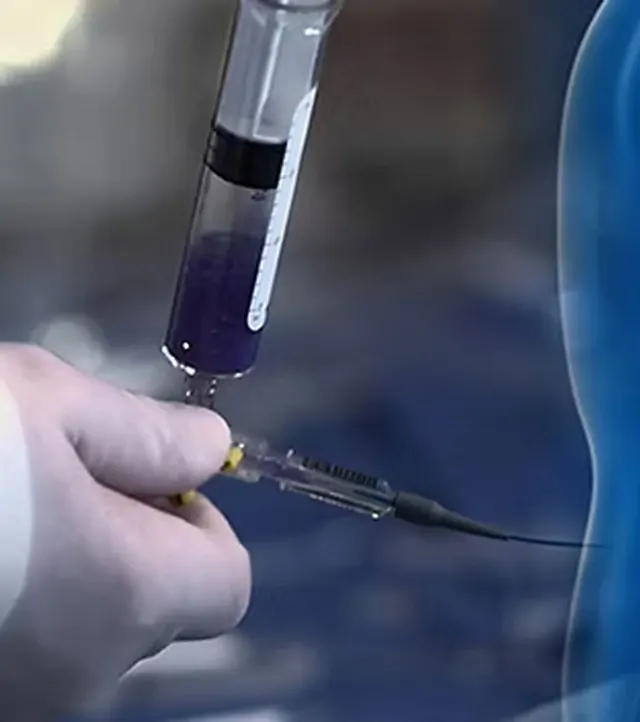
This method, called TAKE (Transarterial ChemoEmbolization), is a procedure that can be used for many tumors, especially liver tumors. It involves administering chemotherapy drugs and vasoconstrictor drugs directly into the artery feeding the tumor. For this procedure, angioedema catheters are inserted into the groin area and advanced to the small artery feeding the tumor. Through the catheter inserted into the artery, preparations that occlude the artery and release the chemotherapy drug are administered intravenously, ensuring the tumor receives an intense dose of chemotherapy and the arteries that feed it are blocked. The greatest advantage of this treatment option is that the entire body is not exposed to the effects of the harsh chemotherapy drugs. This method can be used for patients in good general condition, those with liver cancer or a mass due to cancer metastasis, and those who have not benefited from systemic chemotherapy.
Assoc. Prof. Dr. Mehmet Mahir Atasoy