Non-surgical Parathyroid Adenoma Treatment
5 min read
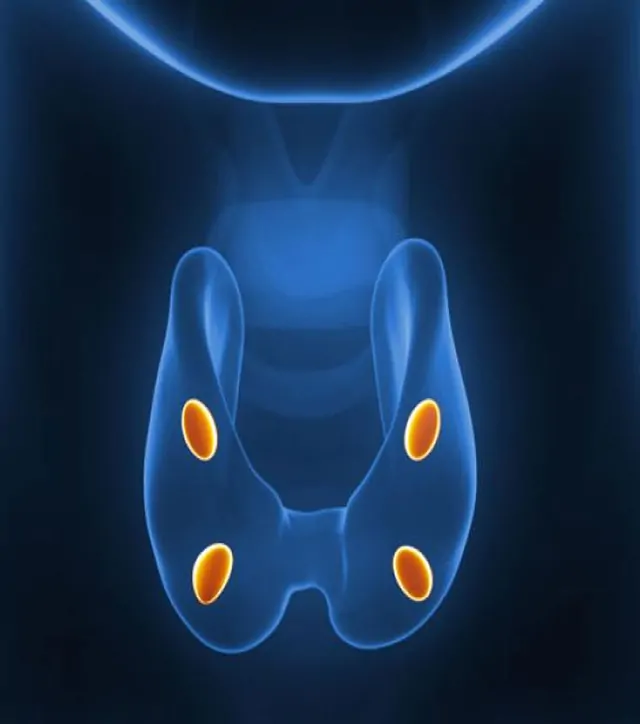
The parathyroid glands are glands located just behind the thyroid gland and secrete parathyroid hormone. There are four parathyroid glands, usually 4 mm in size. The parathyroid glands regulate calcium metabolism in the body.
Hyperparathyroidism (High Parathyroid Gland Levels)
Hyperparathyroidism is the excessive secretion of parathyroid hormone for any reason. There are three types of hyperparathyroidism: primary, secondary, and tertiary. Surgical and medical treatments can be applied to secondary and tertiary hyperparathyroidism, while primary hyperparathyroidism is treated surgically. Patients who do not wish to undergo surgery or cannot undergo surgery due to its risks can be treated with ethanol ablation.
Primary Hyperparathyroidism (Parathyroid Adenoma):
Primary hyperparathyroidism occurs when one or, rarely, more than one of the parathyroid glands becomes enlarged and overactive. This causes excessive secretion of parathyroid hormone (PTH). Excessive PTH secretion also increases calcium dissolution from bone. If this process continues, osteoporosis and bone pain can occur, and blood-filled spaces called "brown tumors" can form in the bones, leading to bone fractures.
Excessive blood calcium can lead to kidney stones and kidney damage, stomach and duodenal ulcers, and gastritis. Additionally, these patients may experience constipation, nausea, muscle weakness, hypertension, and psychiatric disorders (such as depression and mood disorders).
Surgical treatment is parathyroidectomy, or removal of the parathyroid gland. Patients who do not wish to undergo surgery or cannot undergo surgery due to its risks can be treated with ethanol ablation.
Secondary hyperparathyroidism, on the other hand, occurs when the parathyroid glands are stimulated by external factors, increasing PTH production and undergoing changes. It is most commonly seen in patients with chronic renal failure. Diagnosis can be made by low ionized calcium, high phosphorus, and elevated PTH levels in the blood. There are essentially two treatment approaches for SHPT patients: medical (medication) and surgical.
Tertiary hyperparathyroidism develops in patients with long-term chronic renal failure, where the parathyroid glands regain autonomy after successful kidney transplantation. As a result, elevated calcium levels are accompanied by autonomously elevated PTH concentrations.
Clinical Symptoms of Primary Hyperparathyroidism: Bone pain, osteoporosis (bone loss) and bone fractures, kidney stones, nausea, ulcers, constipation, muscle weakness, early fatigue, weakness, difficulty concentrating, and memory problems are observed. Cardiac symptoms include elevated blood pressure, bradycardia (decreased pulse rate), and left ventricular hypertrophy.
Laboratory Tests Required for Diagnosis:
Blood calcium levels and albumin levels are measured together, or the ionized calcium level is measured. Normal blood calcium is generally between 8.5-10.5 mg/dl, and ionized calcium is between 1.13-1.32 mmol/L. Blood calcium (Ca) levels are related to albumin levels. If the albumin level is low, the calcium level is measured lower than its true value. Therefore, a corrected calcium value is calculated.
Corrected Calcium = Measured total Ca + [0.8 x (4.0 – albumin level)]
The normal albumin value is between 3.5 and 5.5 mg/dl. If the albumin value is lower than normal, the corrected calcium value is actually higher. Calculating the corrected calcium value is important in the elderly and those with comorbidities.
When calcium levels are found to be at least twice as high, the parathyroid hormone level is checked. If serum calcium, ionized calcium, and parathyroid hormone levels are high, a diagnosis of primary hyperparathyroidism is made.
and parathyroid hormone levels are high, a diagnosis of primary hyperparathyroidism is made.
24-hour urinary calcium excretion is assessed to rule out rare diseases such as familial benign hypercalcemia. In these patients, 24-hour urinary calcium excretion is lower than normal.
Lithium-induced hypercalcemia (a medication prescribed to manic-depressive patients) should also be considered in the differential diagnosis.
Finally, because vitamin D is low, excessive parathormone secretion may be occurring to increase it. Blood vitamin D levels should be checked, and in patients with low levels, parathormone and calcium should be checked again after vitamin D supplementation.
With excessive parathormone secretion, calcium levels increase, phosphate levels decrease, and serum chloride levels may be normal or high.
Imaging Diagnostic Methods:
Neck Ultrasound: Parathyroid adenomas are usually diagnosed with ultrasound. An adenoma is seen posterior to the thyroid gland on ultrasound in 75-80% of patients.
Parathyroid Scintigraphy: Scintigraphy is not necessary in every case. The sensitivity of parathyroid scintigraphy for detecting parathyroid adenomas is between 60-90%.
In cases where the adenoma is not visualized by ultrasound and scintigraphy, Computed tomography (CT) or neck Magnetic resonance imaging (MRI) may be performed.
Non-surgical Parathyroid Adenoma Treatment (Ethanol Ablation)
Ethanol ablation can be used in patients with primary hyperparathyroidism, where the parathyroid gland is enlarged, as well as in other hyperparathyroidisms with elevated calcium levels.
Although it requires experience because the parathyroid gland is located deep in the neck, ethanol is injected into the parathyroid gland after a needle has correctly reached the gland. Ethanol damages the tissue, reducing the gland's hormone secretion. A single injection is usually sufficient for this procedure.
An experienced interventional radiologist can easily perform the treatment by administering the appropriate dose. Patients' calcium levels usually return to normal the same day after a single injection. In our clinic, we monitor blood calcium levels at three-month intervals after treatment and plan any additional procedures if necessary. Because ethanol ablation is a low-risk and easy treatment for non-surgical parathyroid adenoma treatment, it can be easily repeated if the calcium level does not decrease sufficiently. If you would like to examine the results of ethanol ablation, you can read the following articles(1-5).
Scientific References
Cappelli C ve ark. Modified percutaneous ethanol injection of parathyroid adenoma in primary hyperparathyroidism. QJM. 2008 Aug;101(8):657-62. doi: 10.1093/qjmed/hcn062. Epub 2008 May 22.
Vergès BL ve ar. Results of ultrasonically guided percutaneous ethanol injection into parathyroid adenomas in primary hyperparathyroidism. Acta Endocrinol (Copenh). 1993 Nov;129(5):381-7.
Alherabi AZ ve ark. Percutaneous ultrasound-uided alcohol ablation
of solitary parathyroid adenoma in a patientwith primary hyperparathyroidism. Am J Otolaryngol. 2015 Sep-Oct;36(5):701-3. doi: 10.1016/j.amjoto.2015.04.006. Epub 2015 Apr 15.
Chen HH ve ark. Effects of percutaneous ethanol injection therapy on subsequent
parathyroidectomy. . 2008 Aug;196(2):155-9. doi: 10.1016/j.amjsurg.2007.06.037. Epub 2008 May 29. Nakamura M ve ark. Effects of percutaneous ethanol injection therapy on subsequent surgical parathyroidectomy.