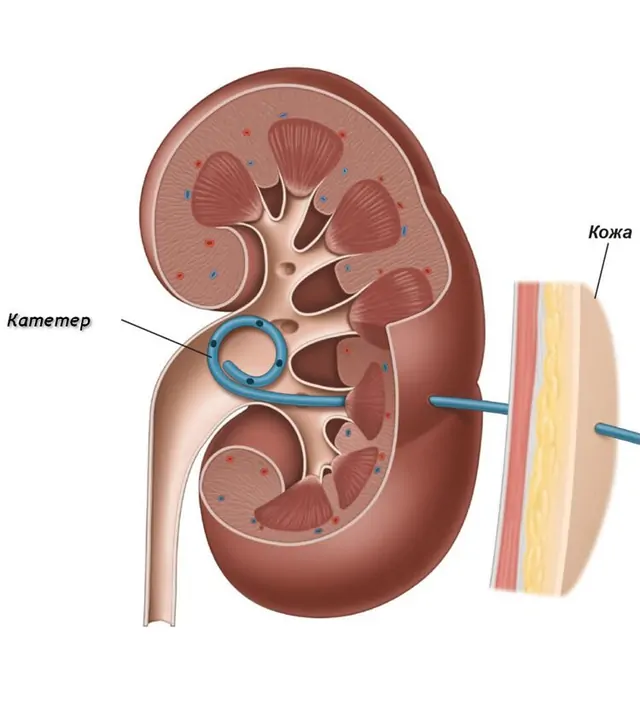
Percutaneous Nephrostomy or Stenting
1 min read
Percutaneous nephrostomy is the placement of a urinary drainage tube (catheter) through the posterior abdominal wall into the kidney. It is performed by interventional radiologists to relieve pressure on the kidneys in cases of obstruction of urine flow through the urethra between the kidney and bladder, or urine leakage into the abdomen from the urethra between the kidney and bladder. The catheter is changed monthly to reduce the risk of infection.
In some cases, a double-ended catheter is placed, with one end in the kidney and the other in the bladder. This catheter is called a ureteral stent. It can be easily inserted in interventional radiology departments under the guidance of an x-ray device called angiography or fluoroscopy.