Port Catheter Placement
3 min read
Port Catheter Placement: Safe Vascular Access for Long-Term Treatments
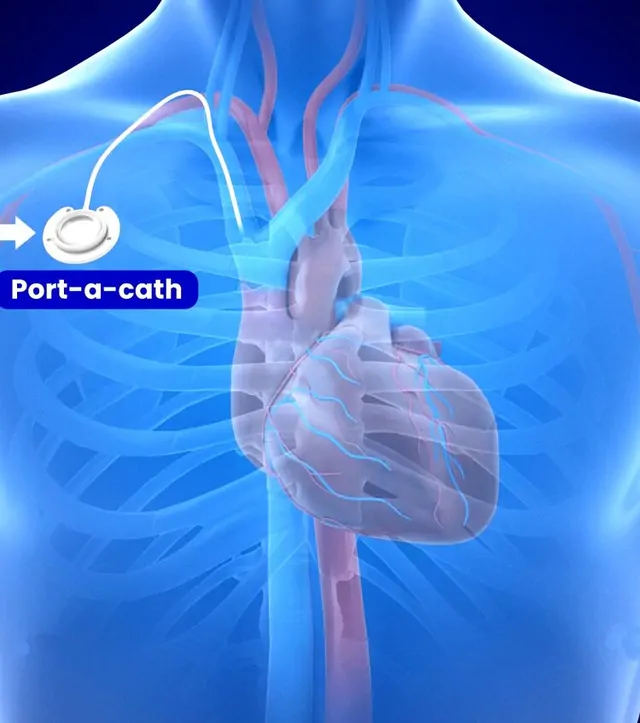
A port catheter is a specialized medical system used in patients requiring long-term vascular access (especially in cases requiring cancer treatment, chemotherapy, nutritional support, or frequent medication administration). It consists of a small reservoir (port) placed under the skin and a thin tube extending from this reservoir to a large vein. This system eliminates the need for a needle each time to establish vascular access; medications, serums, or nutrients can be administered directly into the vein through a special needle placed over the port.
How is a Port Catheter Placed?
Port catheter placement is usually performed under local anesthesia in a sterile operating room.
The tip of the catheter is usually guided into one of the major veins in the neck or chest, and the port is placed under the skin, usually under the collarbone. The procedure takes approximately 30–45 minutes.
The patient can be discharged the same day and return to their normal activities within a few days.
After the procedure, it is recommended to carefully care for the port area for several days.
- Excessive strenuous activity should be avoided.
- The area should be kept clean and dry.
- Dressing should be applied as needed.
Properly placed and regularly maintained port catheters can be used safely for many years.
Advantages of Port Catheters
- They eliminate the need for continuous vascular access.
- They reduce vascular damage and the risk of infection.
- They prevent the risk of chemotherapy drugs leaking out of the vein.
- They provide patient comfort and simplify the treatment process.
Port systems can be used not only in chemotherapy but also in other patients requiring long-term antibiotic therapy, parenteral nutrition, or frequent blood draws.
Care and Monitoring
The port catheter should be flushed regularly with heparinized saline and used under sterile conditions. These procedures must be performed under the supervision of a nurse or doctor. Proper care is crucial to prevent the port from becoming blocked, infected, or dislodged.
If you experience any pain, redness, swelling, or discharge, consult a doctor. These symptoms may be early signs of infection, and with timely intervention, the problem can be easily resolved.
Conclusion: Comfort and Confidence in Treatment
A port catheter is a safe and effective procedure that improves the patient's quality of life during long-term treatments.
A port placed with the correct technique by experienced hands makes the treatment process much more comfortable for both the patient and the healthcare team.