Ultrasound-Guided Sclerotherapy
5 min read
WHAT IS ULTRASOUND-GUIDED FOAM SCLEROTHERAPY?
This treatment method is commonly known as foam therapy or needle therapy. It is a complementary treatment procedure, usually performed in addition to laser or radiofrequency ablation treatments. It is used to treat varicose veins that do not resolve spontaneously after treatment of large, damaged veins. The treatment choice depends on the diameter of the varicose veins, and either foam sclerotherapy or liquid sclerotherapy is applied.
In foam sclerotherapy, a sclerosing medication is mixed with air to form a foam and administered intravenously. Because the foam mixes less with blood, it is more effective than liquid sclerotherapy. Furthermore, by positioning the leg, the foam can be directed to the desired vein and visualized with ultrasound. Because it is more effective, foam sclerotherapy can successfully treat even very large varicose veins. Sclerotherapy is practical and painless, but it takes a little longer for the varicose veins to disappear.
WHAT ARE THE RISKS OF FOAM SCLEROTHERAPY?
Although foam sclerotherapy has been used for many years, it carries some significant risks. Ultimately, you are injecting a powerful drug intravenously, which destroys the vein by chemically damaging it. The most important thing to remember here is to ensure that the administered chemical does not reach the deep veins we do not want it to reach. To achieve this, the veins that will play a role in the passage to the deep veins must first be sealed with heat-based methods such as laser ablation or radiofrequency ablation.
In some cases, heat-sealing the saphenous veins alone is not sufficient, as there are many connections between the varicose veins that rise from the skin and the deep veins. In these cases, the risk of the administered chemical passing into the deep veins has been a headache for doctors treating varicose veins worldwide. I developed a technique to address this issue and published it under the name "Fill and Aspirate Foam Sclerotherapy."
In our article titled "Fill and aspirate foam sclerotherapy (FAFS): a new approach for sclerotherapy of large superficial varicosities concomitant with endovenous laser ablation of truncal veins," published in Clinical Radiology, one of the world's most prestigious journals, we published our technique, which significantly reduces this risk in foam sclerotherapy treatment of large-diameter veins. Those interested can access the details of our article by clicking the following link (https://www.ncbi.nlm.nih.gov/pubmed/25446324).
If the chemical we administer passes into unwanted veins in large amounts, it can form clots in these veins and, in rare cases, can cause clots to travel to the lungs. A second point to be careful about is not to exceed the recommended dose in one session, as these medications can have various side effects after a certain dose. Don't let this intimidate you; in experienced hands, this method has no serious side effects and significantly contributes to the desired cosmetic results.
How is Foam Sclerotherapy Performed? After laser ablation or RF ablation of large veins has been completed, a very thin needle is inserted into the remaining varicose veins using ultrasound guidance. A sclerosing chemical is then injected into the vein, allowing the foam to fill all the varicose veins.
After treatment, the varicose veins gradually shrink and disappear as the body eliminates them. While varicose veins disappear quickly, the scarring on the skin, especially in dark-skinned patients, can take several months to fade.
WHAT IS LIQUID SCLEROTHERAPY?
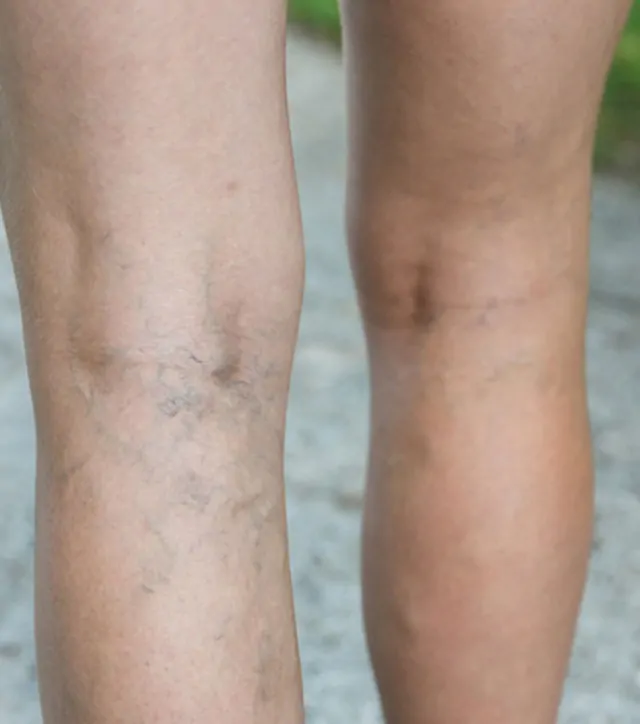
Some people with capillary varicose veins have no problems other than the subcutaneous veins. In others, color Doppler ultrasound can reveal deeper vascular leaks that cause capillary varicose veins. If we think of capillary varicose veins as branches of a tree, treating the root of the tree and the source of the leakage is much more effective, and the cosmetic outcome is satisfactory.
If the problem is limited to subcutaneous strictures, a simple cosmetic treatment can achieve a satisfactory result. However, if there is a leak in a deeper vein and capillary varicose veins are associated with this vein, it is important to identify these feeding branches with a Doppler ultrasound before treating the varicose veins. If ultrasound-guided sclerotherapy is applied to such a patient, the feeding vessel can be closed, and all capillary varicose veins in a large area can be treated with a single injection.
How is Liquid Sclerotherapy performed? How is it different from Foam Sclerotherapy?
Actually, it is not a different method from foam sclerotherapy. The chemical used is the same. However, this chemical is not mixed with air to create a foam; it is injected directly into the vein as a liquid. For capillary varicose veins remaining after laser ablation and foam sclerotherapy treatments, or for superficial capillary varicose veins without a feeding branch to be closed with sclerotherapy, liquid sclerotherapy = needle varicose vein treatment = superficial capillary varicose vein treatments should be applied.
G
This is the most commonly used treatment for superficial capillary varicose veins today. However, in some cases, there are two other chemical-free treatment methods that we prefer.
1. Superficial Transdermal Laser
2. Radiofrequency Thermocoagulation
These treatments have some disadvantages. For example, superficial transdermal laser treatment can cause color changes because the laser must pass through the skin. Sun exposure should be avoided. Due to these side effects, it should be avoided, especially during the summer months.
Radiofrequency Thermocoagulation, on the other hand, involves passing a thin needle through the skin to reach the capillary varicose veins and delivering RF energy. This is a new and effective method that has become widespread in recent years. The side effects of laser therapy are generally not observed with this method. Furthermore, since sun exposure is not required after treatment, it can be applied even on the hottest days of summer, and the patient can swim the next day.