What are the risks of mammography?
2 min read
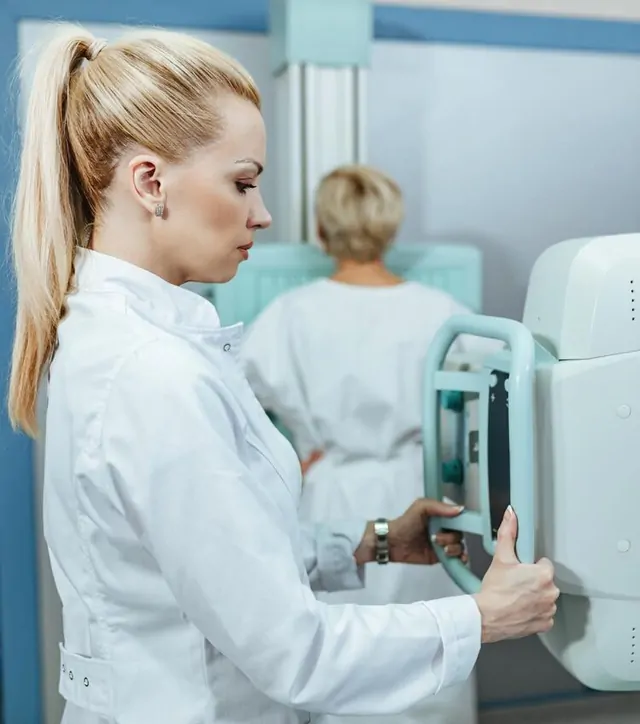
Mammography doesn't pose any particular risks, other than the relatively low dose of radiation it injects. We've mentioned that this radiation exposure isn't a cause for concern. However, there are risks associated with having mammograms performed at centers that aren't specifically focused on breast cancer and lack experience. The most significant risk is having your mammograms performed at a center without a high-quality digital mammography device. This can lead to unnecessary additional scans and excessive radiation exposure, and you could also receive an incorrect or incomplete diagnosis due to poor-quality mammograms.
Also, the risk of your radiology specialist at the center you consult lacking experience in breast radiology should be considered. Having your exams performed by a specialist who dedicates significant time to breast patients, interprets both mammograms, ultrasounds, and breast MRIs, and can also perform therapeutic procedures such as biopsies and percutaneous excision when necessary, is a significant advantage.
You'll receive the most accurate answers to your questions. It's crucial to emphasize that if you haven't yet been diagnosed with breast cancer and haven't been indicated for surgery, the most important thing to research is an experienced breast radiologist. An experienced breast radiologist can protect you from unnecessary tests and biopsies. We often observe that patients who come to our clinic for second opinions often have unnecessary biopsies recommended.
These unnecessary breast biopsies can sometimes lead to unnecessary breast surgeries. There's a sentence that breaks my heart when I hear it from our patients: "Our doctor XX performed the surgery, we were terrified, but thankfully, it came out clean." This means our patient underwent unnecessary breast surgery. She endured all that stress for nothing, took all the risks of anesthesia and surgery for nothing. In today's medical algorithm, no experienced breast surgeon would operate on a patient without first obtaining an ultrasound-guided biopsy to determine the pathological diagnosis—that is, whether the diagnosis is benign or malignant.
In conclusion, rather than focusing on the risks of mammography, we should consider the risks associated with the center performing the mammogram and the radiologist interpreting it.