What You Need to Know About Thyroid Diseases
7 min read
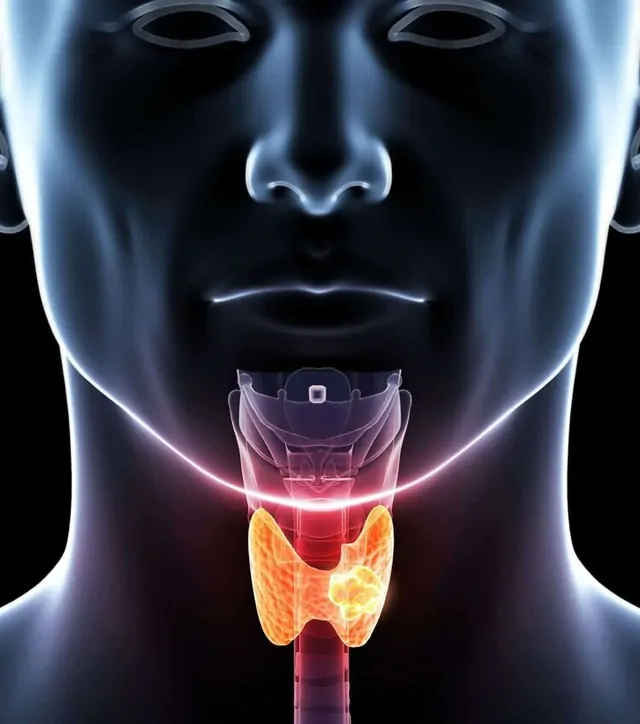
The thyroid gland is a gland located at the front of our neck, just below the level of our trachea. The thyroid gland's most important function is to secrete hormones that regulate metabolic rate. The T3 and T4 hormones secreted by the thyroid gland play a role in crucial processes such as heart rate, blood pressure, cholesterol, fat, and sugar metabolism. The blood levels of thyroid hormones are regulated by thyroid-stimulating hormone (TSH), secreted by the pituitary gland in the brain.
An underactive thyroid gland is called hypothyroidism. Hypothyroidism results in a decrease in heart rate and blood pressure, slowed movements, a tendency to sleep, and often leads to constipation. Hyperthyroidism, meaning an overactive thyroid, can cause sweating, tremors, irritability, high blood pressure, and an increase in heart rate. Diarrhea and weight loss can also be observed in hyperthyroidism.
The most common thyroid disease is thyroid nodules. Ultrasound is the most sensitive examination method. Nodules can be detected on ultrasound in approximately 50% of healthy people over the age of 50. In fact, more than 90% of these nodules are benign, while only less than 10% can be malignant (containing cancer cells). It is crucial that the radiologist performing the ultrasound be experienced and able to provide detailed reports about the nodule's structure.
The easiest way to determine whether nodules larger than 1-1.5 cm in diameter are benign or cancerous on ultrasound is to perform a fine-needle aspiration biopsy (FNAB). Interventional radiologists experienced in thyroid biopsies use a small needle under ultrasound guidance to remove cells from the nodule, and these cells are examined under a microscope for pathology to determine the diagnosis. The biopsy result can be either benign or malignant, but in some cases, it can be suspicious.
If the biopsy result is consistent with malignancy (cancer), a portion or the entire thyroid is surgically removed. Radioactive iodine therapy may then be administered to destroy any remaining cells. The radioactive iodine exposes the entire thyroid gland to intense radiation. After this treatment, the patient is kept in a room with all lead walls for 2-3 days.
In 90% of cases with suspicious biopsy results, a repeat fine-needle biopsy and/or core-needle biopsy can be performed to confirm a benign diagnosis. Therefore, immediately undergoing surgery when the result is suspicious is not the right approach. In centers that recommend immediate surgery instead of a second biopsy, unnecessary thyroid surgery is performed for benign thyroid nodules in 90% of cases.
In addition to the risks associated with permanent hoarseness or anesthesia, many patients are forced to depend on synthetic thyroid hormone for life after the surgery. Experiencing all this for a thyroid nodule that is actually benign is unbecoming of 21st-century medical practice. It also violates the oldest and most important principle of medicine: "First, do no harm to the patient."
However, in such patients, a second needle biopsy using the trucat method (thick-needle biopsy) can largely provide a definitive diagnosis and prevent unnecessary surgery. This is because trucat biopsy allows for larger tissue samples to be removed than with FNAB, and the pathology allows for a more accurate diagnosis. Recent studies have shown that in patients with equivocal results on the initial FNAB, a trucat biopsy yields a definitive diagnosis with a rate of approximately 80-90%.
Therefore, a trucat biopsy should be performed first in such patients. If the trucat biopsy is still inconclusive (which is very rare), then surgery should be considered.
If the biopsy result is benign and the patient has no symptoms, the nodule is monitored with ultrasound at 6-month intervals. However, if the benign nodule exceeds a certain diameter, causes symptoms, or is growing rapidly, treatment is generally recommended. Symptoms requiring treatment in benign nodules may be due to the mass effect of the thyroid nodule or its hormone production.
Due to the mass effect of the nodule, complaints such as cosmetic problems, difficulty swallowing, shortness of breath, voice changes, and neck pain may occur. Additionally, due to the nodule's hormone production, symptoms such as palpitations, irritability, hand tremors, insomnia, and sweating may also occur.
The traditional treatment method is surgical removal of part or all of the thyroid gland. However, thyroid surgery carries certain risks and disadvantages. It leaves a permanent incision in the neck, often requires lifelong medication, and there are risks associated with anesthesia. Applying all these risks to a benign nodule is incompatible with modern medicine and is a questionable approach.
New treatment methods for benign nodules have been developed and are being successfully implemented in recent years. Percutaneous ablation methods are a good alternative to surgery and have been widely used worldwide in the last 10 years. Surgery is also available in our country.
Interventional radiologists are experienced in the treatment of indolent thyroid nodules.
In this method, various needles are inserted into the nodule under local anesthesia and ultrasound guidance, and the nodule is destroyed by heating it with laser, radiofrequency, or microwave energy (thermal ablation). For cystic (fluid-containing) nodules, the first-line treatment is alcohol injection (chemical ablation). With modern methods, painless and scalpel-free thyroid nodule treatment can be performed, allowing patients to return to their normal lives within a few hours.
Furthermore, they do not have to take synthetic thyroid hormones for life. Therefore, non-surgical modern methods should be the first choice for benign nodules. Conventional surgical treatments should be applied as a second stage only if necessary.
GOITER:
Goiter is another condition of the thyroid gland that should be considered separately from nodules. By definition, a goiter is an enlargement of the thyroid gland. If the thyroid gland is enlarged with lumps in the form of nodules, it is called a nodular goiter. Enlargement without nodules is called simple goiter.
In simple goiter, thyroid hormone production is decreased, and high amounts of thyroid-stimulating hormone (TSH) are secreted from the pituitary gland in the brain to stimulate the thyroid gland to produce more hormones. High TSH enlarges the thyroid gland, resulting in simple goiter.
This process can be triggered by two factors that can cause the thyroid gland to not produce enough hormones. The first is iodine deficiency, and the second is autoimmune diseases of the thyroid gland, such as Hashimoto's disease. In autoimmune diseases, antibodies produced against thyroid cells cause thyroid damage.
In nodular goiter, the nodules within the gland reach very large sizes. If these nodules are numerous, this condition is called multinodular goiter (MNG). If hyperthyroidism is present along with MNG, a thyroid scan is performed to determine which nodule is producing excess hormones and to tailor treatment to that nodule. By evaluating ultrasound images along with scintigraphy images, the hormone-producing nodule (hot nodule) is determined.
Then, with newer methods, it is possible to treat only that nodule. MNG is also crucial for evaluating cancerous nodules. Nodules that appear large, dark, non-cystic, have irregular borders, and contain small foci of calcification on ultrasound imaging are more likely to be cancerous. Nodules that are benign on biopsy can be treated with follow-up or percutaneous ablation (non-surgical thyroid nodule treatment).
It has been shown that less than 10% of patients with MNG have small foci of cancer within their nodules. However, these cancers are most often of the papillary carcinoma type, the most benign thyroid cancer. Low-risk papillary carcinoma (microcarcinoma) of the thyroid gland is a very slow-growing cancer with a 20-year survival rate of 99%. 95% do not show significant growth. As a result, patients with MNG have a very low risk of cancer.